These articles are protected by
copyright: Simon Rademan Fashion Design Studio CC Media
request for an interview
 ...scroll down for more information
on
the
RAINBOW
people of South Africa
(in alphabetical order)
...scroll down for more information
on
the
RAINBOW
people of South Africa
(in alphabetical order)
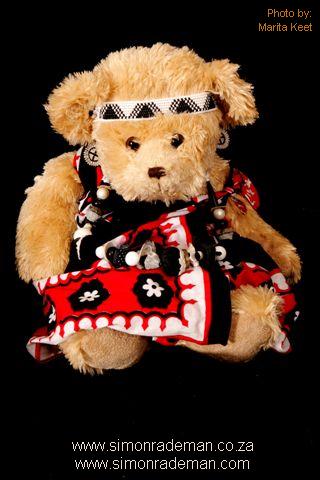
 It was 'divine intervention'
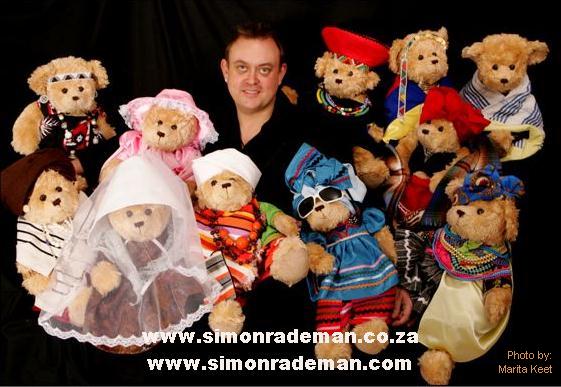
when I was asked by Edith Venter Promotions to design and style outfits for
the honourable 'guests' of the 5th annual Teddy Bear's Banquet
(the teddy bears, representing South Africa’s 11 official
languages).
This was in aid of the Red Cross Children's Hospital and took
place at SA Fashion Week in Sandton, Jhb.
It was 'divine intervention'
when I was asked by Edith Venter Promotions to design and style outfits for
the honourable 'guests' of the 5th annual Teddy Bear's Banquet
(the teddy bears, representing South Africa’s 11 official
languages).
This was in aid of the Red Cross Children's Hospital and took
place at SA Fashion Week in Sandton, Jhb.
Use quickfind:
Afrikaans /
English / IsiNdebele
/ IsiXhosa / IsiZulu
/ SePedi / SeSotho
/ SeTswana / Siswati
/ TshiVenda /
Xitsonga
Afrikaans
language …
The Afrikaner people
 The 'Voortrekker' women would
get married in gowns made from brocades and silks in
darker colours like black, brown and even purple. White
wedding gowns only originated around the time when Queen
Victoria was married in a white dress. Dresses emphasized
the waistline and was often corseted. Women wore a hat called
a 'kappie' and this was to protect them from the South African
sun.
The 'Voortrekker' women would
get married in gowns made from brocades and silks in
darker colours like black, brown and even purple. White
wedding gowns only originated around the time when Queen
Victoria was married in a white dress. Dresses emphasized
the waistline and was often corseted. Women wore a hat called
a 'kappie' and this was to protect them from the South African
sun.
English
language
…
The
English people
 The
Brittish Settlar's came to South Africa around 1820, wearing a hat
called a "bonnet" which reminded a lot of the 'Voortrekker
kappie, but it was worn more open and upright and combined with
softer fabrics like chiffon. They were alo known for
'empire'-line dresses and protected themselves from the South
African sun with an umbrella.
The
Brittish Settlar's came to South Africa around 1820, wearing a hat
called a "bonnet" which reminded a lot of the 'Voortrekker
kappie, but it was worn more open and upright and combined with
softer fabrics like chiffon. They were alo known for
'empire'-line dresses and protected themselves from the South
African sun with an umbrella.
Isindebele
language …The Ndebele people
 Ndebele's
are known for their colourful craftsmanship. Colours like red,
yellow and blue brightens up their outfits and are used in
wall-paintings. Some of the more traditional women still wear
very distinctive brass neck rings and blankets with beaded
adornments
Ndebele's
are known for their colourful craftsmanship. Colours like red,
yellow and blue brightens up their outfits and are used in
wall-paintings. Some of the more traditional women still wear
very distinctive brass neck rings and blankets with beaded
adornments
isiXhosa
language …
The Xhosa people
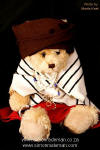 Traditionally,
the Xhosa's were hunters and very early users of what is
today known as 'make-up'. They would paint their faces
with clay and many still do around the time that
family-members are initiated. Their craftsmanship
include the beading of ornaments. Women enjoy smoking
from a long wooden smoking pype.
Traditionally,
the Xhosa's were hunters and very early users of what is
today known as 'make-up'. They would paint their faces
with clay and many still do around the time that
family-members are initiated. Their craftsmanship
include the beading of ornaments. Women enjoy smoking
from a long wooden smoking pype.
isiZulu
language …
The Zulu people
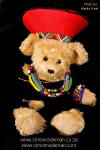 In earlier times, the women
used bright and colourful earplugs that were inserted into the
earlobe and gradually stretched to larger holes. The women
still pierce their ears today, but would rather hang wooden
ear jewelry that are generally found at flea markets where
African goods are sold to tourists. I strongly suspect they
know what fashion's 'little black number' was long before Coco Chanel
'discovered' it. Zulu women still love wearing black and
often emphasizes with green and red. They are known for the zig-zag pattern we often see, they wear leather skirts (Isidwada),
and prefer the larger plastic beads. in their crafts and
jewelry.
In earlier times, the women
used bright and colourful earplugs that were inserted into the
earlobe and gradually stretched to larger holes. The women
still pierce their ears today, but would rather hang wooden
ear jewelry that are generally found at flea markets where
African goods are sold to tourists. I strongly suspect they
know what fashion's 'little black number' was long before Coco Chanel
'discovered' it. Zulu women still love wearing black and
often emphasizes with green and red. They are known for the zig-zag pattern we often see, they wear leather skirts (Isidwada),
and prefer the larger plastic beads. in their crafts and
jewelry.
Sepedi
language …
The pedi people
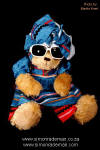 Pedi women's traditional
outfits involve a shorter version of the 'empire' dress-length
and much wider. Rich embellishment-lines are often found on
this. Under this they would drape a piece of cloth and wear
it as a 'layered look -ensemble. They are known for novelties
and often seen wearing sunglasses. Although many historic
tribal rituals involved dancing, Pedi women still love calling
on formal dancing.
Pedi women's traditional
outfits involve a shorter version of the 'empire' dress-length
and much wider. Rich embellishment-lines are often found on
this. Under this they would drape a piece of cloth and wear
it as a 'layered look -ensemble. They are known for novelties
and often seen wearing sunglasses. Although many historic
tribal rituals involved dancing, Pedi women still love calling
on formal dancing.
Sesotho
language
…
The
basotho people
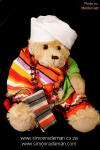 Women painted their faces with clay and
spent much time by making clothing items from straw. During
and after female initiation ceremonies, women would (and still
do) paint their faces. They still wear masks that represent
this initiation and straw-costumes that are associated with
fertility.
Women painted their faces with clay and
spent much time by making clothing items from straw. During
and after female initiation ceremonies, women would (and still
do) paint their faces. They still wear masks that represent
this initiation and straw-costumes that are associated with
fertility.
seTswana
language
…
The
Tswana people
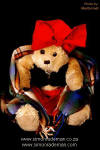 The Tswana women uses a
patterned blanket to complete the final look. Traditionally
many women had no problem with partial nudity. A form of
westernization was the bra's and sport shoes that the women
started wearing. Their ability to craft from wood is shown in
walking sticks with faces that they carried with them.
The Tswana women uses a
patterned blanket to complete the final look. Traditionally
many women had no problem with partial nudity. A form of
westernization was the bra's and sport shoes that the women
started wearing. Their ability to craft from wood is shown in
walking sticks with faces that they carried with them.
Siswati
language …
The Swazi people
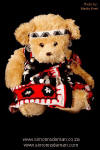 Red, white and black are
strong colours that are used in cloths for Swazi women
ensembles. These cloths are often tied diagonally from the
shoulder downwards. Macramé is a knotting- and weaving-method
that is used to make carriers for a vast variety of items.
Their pottery is much sought after, both nationally and
internationally.
Red, white and black are
strong colours that are used in cloths for Swazi women
ensembles. These cloths are often tied diagonally from the
shoulder downwards. Macramé is a knotting- and weaving-method
that is used to make carriers for a vast variety of items.
Their pottery is much sought after, both nationally and
internationally.
TshiVenda
language …
The
venda
people
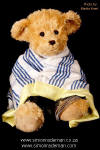 A cloth called 'vhulungu' is worn to complete their look. A towel is often worn
under a dress, and women used to wear many silver bangles
around their wrists and their ankles. These bangles are a
gift from a married woman's husband's family. Although they
did not wear much other jewellery in general, the more modern
woman will wear earrings.
A cloth called 'vhulungu' is worn to complete their look. A towel is often worn
under a dress, and women used to wear many silver bangles
around their wrists and their ankles. These bangles are a
gift from a married woman's husband's family. Although they
did not wear much other jewellery in general, the more modern
woman will wear earrings.
Xitsonga
language …
The Tsonga people
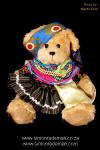 A traditional skirt would
consist of 40 metres of fabric that is pleated around the
waist, and worn to traditional dance celebrations. Turquoise,
lime green and pink are colours that are often seen in their
jewellery, and a shirts has to have a dotted appearance. Two
loose cloths (in contrasting colours are knotted on the
shoulder and hangs diagonally downwards. Silver ankle
bracelets (lots of them) are handmade in a distinctive spiral
technique, and worn on both feet.
A traditional skirt would
consist of 40 metres of fabric that is pleated around the
waist, and worn to traditional dance celebrations. Turquoise,
lime green and pink are colours that are often seen in their
jewellery, and a shirts has to have a dotted appearance. Two
loose cloths (in contrasting colours are knotted on the
shoulder and hangs diagonally downwards. Silver ankle
bracelets (lots of them) are handmade in a distinctive spiral
technique, and worn on both feet.
Read a different article /
RAINBOW BEARS BANQUET /
Red Cross War Memorial Children’s
Hospital
 Disclaimer: I
am not a formally trained historian, merely a fashion designer
and style director, searching for inspiration from the colourful South African people, fondly known as "the Rainbow
nation". I will be launching my newest couture
collection at RCP Prestige Women's day at Gallagher Estate and
has been inspired by this project to showcase South African
women as unique, stylish, and elegant. Browse through
this site and find out more about fashion in general.
Disclaimer: I
am not a formally trained historian, merely a fashion designer
and style director, searching for inspiration from the colourful South African people, fondly known as "the Rainbow
nation". I will be launching my newest couture
collection at RCP Prestige Women's day at Gallagher Estate and
has been inspired by this project to showcase South African
women as unique, stylish, and elegant. Browse through
this site and find out more about fashion in general.
 Acknowledgements:
Lodewyk
Ferreira and Sally (Great start-off); Vanishing cultures
of South Africa (Book reference); Edith Venter
Promotions (concept); Marita Keet for the photographs;
Bruma Lake fleamarket, Rosebank rooftop; Pretoria Zoo;
Niko Grobler (co-designer and -stylist); and the many
women from different cultures that I interviewed for this
project: Sandra, Elsabe, Dinah, Elsie, Maria, Martha,
Grace, Bongi, Gerda, Catherin , Julie, Dora, Katie, Sarah,
Gaby Dorothy, Sue, Mary,
Acknowledgements:
Lodewyk
Ferreira and Sally (Great start-off); Vanishing cultures
of South Africa (Book reference); Edith Venter
Promotions (concept); Marita Keet for the photographs;
Bruma Lake fleamarket, Rosebank rooftop; Pretoria Zoo;
Niko Grobler (co-designer and -stylist); and the many
women from different cultures that I interviewed for this
project: Sandra, Elsabe, Dinah, Elsie, Maria, Martha,
Grace, Bongi, Gerda, Catherin , Julie, Dora, Katie, Sarah,
Gaby Dorothy, Sue, Mary,
What we do: During a
consultation, our aim is to show you the possibilities of
looking your best! Knowledge is power! We shamelessly
share information with you and enable you to experience the
splendour of looking your best at all times! Should you want
this information at hand, at all times, we now have selected
information available regarding the following:
Wardrobe-planning,
Figure
analysis, The little black no.,
How Simon Rademan lost 35kg,
and The Elements of Fashion.
Back to top
Previous articles
back to homepage Bridal
- Fashion
- Magazine
Covers - Wall of
Fame